Our top picks for acoustic panels, bass traps, and diffusers to transform your home theater's sound quality. From budget-friendly options to professional-grade treatment.
Here is a truth that most home theater enthusiasts learn the hard way: your room has more influence on what you hear than any single piece of equipment. You can spend thousands on premium speakers, a reference-grade subwoofer, and a top-tier AV receiver, but if your room is an untreated rectangular box with drywall and hardwood floors, you are hearing your room more than your equipment. Sound bounces off every hard surface, arrives at your ears at slightly different times, and creates a smeared, muddy mess that no amount of EQ or room correction software can fully fix.
Acoustic treatment addresses the problem at its source. Absorption panels tame harsh reflections that cause comb filtering and make dialogue unintelligible during action scenes. Bass traps in corners smooth out the low-frequency standing waves that make your subwoofer sound boomy in one seat and thin in another. Diffusers scatter reflections evenly so the room retains a sense of spaciousness without the echo. The result is tighter bass, clearer dialogue, more precise surround imaging, and an overall presentation that sounds like your equipment is suddenly performing two tiers above what you paid for it. If you are reading our home theater setup guide and planning a room build, acoustic treatment should be in your budget from the start, not an afterthought.
The good news is that acoustic treatment does not have to be expensive or ugly. Modern acoustic panels come in fabric-wrapped designs that look like art, and strategic placement of just 8-12 panels can transform a room. You do not need to cover every wall. You need to treat the right spots. That is exactly what this guide will help you do.
Use our free calculators to find exactly how many panels and bass traps your room needs based on its dimensions and surfaces.
Acoustic treatment falls into three categories, and a well-treated home theater uses all three. Understanding what each type does and where it works best is essential before you spend a dollar on panels. Too many people slap foam on every wall and wonder why their room still sounds bad. Each type of treatment solves a different problem, and applying the wrong type in the wrong place is a waste of money. If you are also building out a dedicated HiFi listening room, these same principles apply with even greater precision.
Absorption panels are the workhorse of acoustic treatment. Made from dense fiberglass, mineral wool, or acoustic foam, they absorb sound energy rather than letting it bounce back into the room. When placed at first reflection points on side walls and the ceiling, they eliminate the early reflections that cause comb filtering, a destructive interference pattern that smears imaging and makes dialogue sound hollow.
Panel thickness determines which frequencies are absorbed. Thin 1-inch foam absorbs only high frequencies above 1kHz, which can make a room sound dull and boxy. Two-inch rigid fiberglass panels absorb effectively down to about 250Hz. Four-inch panels reach down to approximately 125Hz. For home theater, 2-inch panels are the minimum recommended thickness, and 4-inch panels at first reflection points provide the best performance. The density of the material also matters: look for panels rated at 3-6 lb/ft3 density for broadband absorption.
Bass traps are thick, dense absorbers designed specifically to control low frequencies below 300Hz. Low-frequency sound waves are long, measuring 4-40 feet, and they build up in room corners where walls meet walls, walls meet ceilings, and walls meet floors. These corner buildups create standing waves that make certain bass frequencies boom while others nearly disappear, a problem called room modes that no amount of thin panel treatment can solve.
Bass traps work by placing dense absorptive material in the corners where bass energy is concentrated. Triangular or cylindrical traps that span the full height of a corner from floor to ceiling are most effective. Even modest bass trapping in the four vertical room corners and the four ceiling-wall edges can reduce bass irregularities by 6-10dB, which is the difference between boomy, one-note bass and tight, articulate low end. If your subwoofer sounds great in some seats but terrible in others, bass traps are the solution, not a different subwoofer.
Diffusers scatter sound energy in multiple directions rather than absorbing it. This preserves the room's acoustic energy and sense of liveliness while preventing distinct reflections and flutter echo. A room treated only with absorption can sound dead and uncomfortable, like talking inside a closet. Diffusers solve this by redirecting reflections without removing them, maintaining the natural spaciousness that makes a room feel alive.
Diffusers are most effective on the rear wall behind the seating position and on the ceiling above the listening area. They work best when the reflecting surface is at least 6 feet from the listener, because the scattered reflections need distance to blend together. Common types include QRD (quadratic residue diffusers) with calculated well depths and skyline diffusers with varying block heights. For most home theaters, diffusers are the finishing touch applied after absorption and bass trapping have addressed the primary issues. If you are configuring a 5.1 or 7.1 Atmos system, diffusers on the rear wall help the surround channels sound more enveloping.
Placement matters far more than quantity. Six panels in the right locations will outperform twenty panels placed randomly. Here is the priority order for treating a home theater room, from highest impact to lowest. Use our acoustic panels calculator to determine the exact number of panels your specific room dimensions require.
First reflection points are the spots on the side walls where sound from the front speakers bounces directly to the listening position. These reflections arrive just milliseconds after the direct sound and cause comb filtering, a phase cancellation effect that makes dialogue sound thin, imaging sound blurry, and the entire presentation sound like it is coming from inside a bathroom.
The mirror trick: Have someone sit in the primary listening position. Hold a mirror flat against the side wall at speaker height. Slide it along the wall while the seated person watches. Every spot where they can see a speaker driver in the mirror is a first reflection point that needs treatment. Mark those spots and place absorption panels centered on them. You will typically find 2-3 reflection points per side wall, corresponding to the left, center, and right speakers. This single treatment step usually produces the most dramatic improvement in any room.
Every room has eight tri-corners (where two walls and a ceiling or floor meet) and four vertical edges. Bass energy concentrates in all of them. The four vertical room corners are the highest priority because they affect the most prominent room modes. Floor-to-ceiling bass traps in these corners absorb the low-frequency buildup that makes bass sound boomy, uneven, and undefined.
Start with the two front corners behind or beside the speakers, then add the two rear corners. If budget allows, treating the four ceiling-wall edges (where the ceiling meets the side walls and front/rear walls) provides additional bass control. Triangular corner traps like the Auralex LENRD or full-height stacked bass traps from GIK Acoustics are specifically designed for this purpose. Even partial corner treatment, covering the top 4 feet of each corner, provides meaningful improvement over no treatment at all.
The ceiling is often the most neglected surface in home theater treatment, yet it produces some of the strongest early reflections. Sound from your front speakers bounces off the ceiling and arrives at the listening position with enough energy to cause the same comb filtering problems as side wall reflections. This is especially problematic for Dolby Atmos setups where height channels rely on precise overhead sound placement.
Use the same mirror trick on the ceiling. Lay on the floor (or tape a mirror to a broomstick held against the ceiling) and mark the reflection points between the front speakers and the listening position. Two to four panels on the ceiling in this zone make a significant difference. Cloud panels, wide panels hung horizontally below the ceiling with an air gap, are particularly effective because the gap enhances low-frequency absorption.
The rear wall behind the seating position reflects sound back toward the listener, creating slap echo and late reflections that smear the surround soundfield. If you clap your hands in the room and hear a distinct flutter echo (a rapid repeating metallic ring), the rear wall is the primary culprit.
For rear walls close to the seating (within 4 feet), absorption panels are the best choice because the reflections arrive too quickly for diffusion to work effectively. For rear walls 6 feet or more from the seating, diffusers are preferred because they scatter the energy and maintain the room's sense of envelopment. A combination of both, with absorbers at ear level and diffusers above, works well in most rooms. If you have surround speakers on or near the rear wall, treat the areas between and beside the speakers while leaving the speaker locations clear. For more on speaker placement, see our room planner calculator.
We evaluated the leading acoustic treatment products across performance, value, and aesthetics. These six products cover every need from budget-friendly foam to professional-grade fiberglass panels and purpose-built bass traps. Each pick represents the best option in its category for home theater use in 2026.
| Category | Product | Type | Price |
|---|---|---|---|
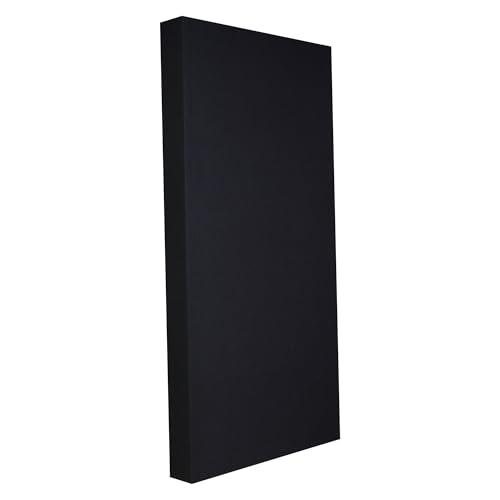
| Best Overall | ATS Acoustics 24x48x2" (6-pack) | Fiberglass Panels | ~$280 |
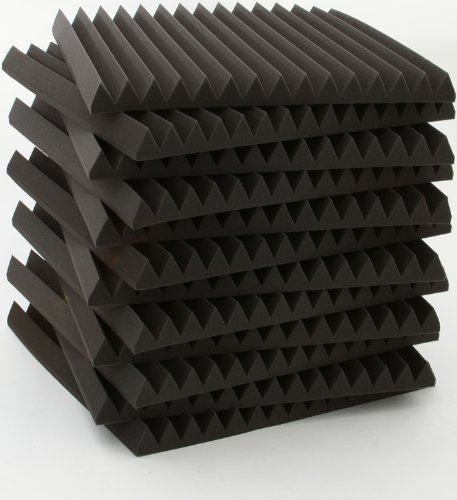
| Budget Pick | Auralex Studiofoam Wedges (24-pack) | Acoustic Foam | ~$80 |
| Best Bass Trap | GIK Acoustics 244 Bass Trap (pair) | Bass Trap | ~$200 |
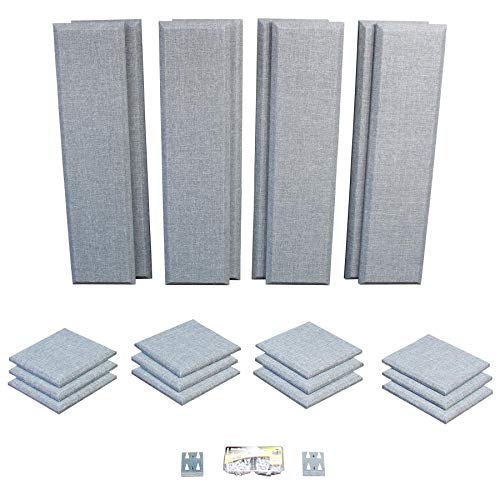
| Best Room Kit | Primacoustic London 10 Room Kit | Complete Kit | ~$600 |
| Best Looking | Bubos Art Acoustic Panels (6-pack) | Decorative Panels | ~$40 |
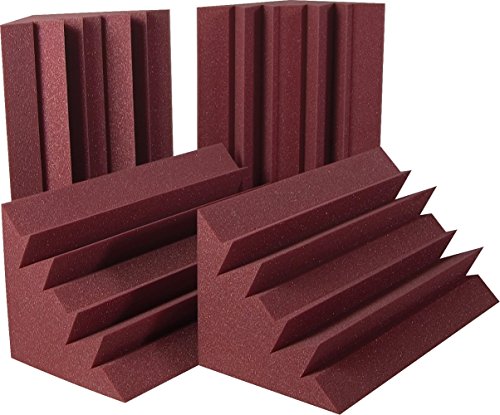
| Best Corner Bass Traps | Auralex LENRD Bass Traps (4-pack) | Corner Bass Traps | ~$130 |
As an Amazon Associate, we earn from qualifying purchases.
The ATS Acoustics panels are the gold standard for home theater acoustic treatment and the product we recommend to anyone serious about improving their room's sound. Each panel measures 24 by 48 inches and is 2 inches thick, filled with rigid fiberglass insulation that absorbs effectively across a wide frequency range from approximately 250Hz up through the highest audible frequencies. The fabric wrapping is clean, professional, and available in multiple colors to match your room's aesthetic. At roughly $47 per panel in the 6-pack, they deliver commercial-grade performance at a price that undercuts most competitors.
What sets ATS apart is the build quality and consistency. The hardwood frames are solid and straight, the fabric is tightly wrapped with no sags or wrinkles, and each panel hangs flush against the wall with the included impaler clips. Six panels is the perfect starting quantity: two for left and right first reflection points, two for the ceiling reflection zone, and two for the front wall beside the speakers. From there you can order additional panels as needed. For home theater use, these panels dramatically tighten dialogue intelligibility, sharpen surround imaging, and make the room sound like it was professionally designed. If you are following our home theater setup guide, these are the panels we reference throughout.
Auralex Studiofoam Wedges are the most recognized acoustic foam panels in the industry and remain the best budget entry point for home theater treatment. The 24-pack of 1-foot-square wedge panels costs around $80, making it possible to treat an entire room's first reflection points for less than the price of a single premium panel. The wedge profile increases surface area for better high-frequency absorption compared to flat foam, and the charcoal gray color is unobtrusive in a dark home theater environment.
The honest limitation of acoustic foam is frequency range. At 2 inches thick, these wedges absorb effectively above 500Hz but have minimal impact below 300Hz. This means they will tame harsh reflections, reduce flutter echo, and clean up dialogue clarity, but they will not address bass problems or room modes. For a home theater on a tight budget, Studiofoam Wedges combined with corner bass traps (like the Auralex LENRDs below) provide a meaningful improvement at a fraction of the cost of an all-fiberglass treatment. Use them at first reflection points and on the rear wall, and save the bass traps for the corners. If your budget grows later, you can replace the foam panels with fiberglass at the most critical positions. For room layout help, try our room planner calculator.
The GIK Acoustics 244 Bass Trap is the most versatile acoustic treatment product available because it functions as both a broadband absorber and a bass trap simultaneously. Each panel measures 24 by 48 inches and is a full 6 inches thick, filled with high-density rigid fiberglass that absorbs effectively from below 100Hz all the way through the upper frequency spectrum. Placed in corners, straddling the wall junction at a 45-degree angle with an air gap behind, these panels provide exceptional low-frequency absorption that tames the room modes responsible for boomy, uneven bass.
GIK is a company built by acousticians, and it shows in the product design. The 244 can be used flat against a wall as an oversized broadband absorber, in corners as a dedicated bass trap, or on the ceiling as a cloud panel. The fabric options include standard and premium colors, and the build quality is impeccable. At $200 for a pair, they are not the cheapest option, but the dual-purpose functionality means you need fewer total panels. Two pairs of 244s in the four room corners plus six standard 2-inch panels at first reflection points is a professional-grade treatment plan for most home theater rooms. Use our acoustic panels calculator to see exactly how this configuration works for your room dimensions.
The Primacoustic London 10 is the best all-in-one acoustic treatment kit for anyone who does not want to piece together individual panels, figure out quantities, or worry about whether they have the right mix of treatment types. This kit includes a combination of broadband absorption panels in two sizes (24x48 and 12x48 inches), all 2 inches thick and made from high-density glass wool. Primacoustic includes all the mounting hardware, a placement guide, and enough panels to treat a room up to approximately 10 by 12 feet, which covers most small to medium dedicated home theaters.
Primacoustic is a professional audio brand used in recording studios worldwide, and the London 10 brings that same quality to the home theater market. The panels use a proprietary high-density glass wool core with a resin-hardened edge that resists crumbling and maintains its shape over time. The included Impalers make mounting to drywall simple and tool-free. The kit is designed to treat first reflection points, the front wall, and portions of the side and rear walls with a calculated mix of panel sizes. For dedicated rooms where you want a complete, professional result without research paralysis, the London 10 saves time and delivers consistently excellent results. If you are planning a full room build, pair this with our home theater setup guide for a complete blueprint.
The Bubos Art Acoustic Panels solve the number one objection people have about acoustic treatment: aesthetics. These panels feature printed artistic designs on high-density polyester fiber, turning functional acoustic treatment into wall art. The 6-pack includes panels in coordinated designs that can be arranged in various patterns, and the beveled edge gives each panel a finished, gallery-like appearance. They install with adhesive strips or standard picture-hanging hardware.
In terms of acoustic performance, the Bubos panels are honest mid-range performers. The polyester fiber material is less dense than rigid fiberglass, so absorption is concentrated in the mid and high frequencies with limited low-frequency impact. They will reduce flutter echo, tame harsh reflections, and clean up general room reverberation, but they will not address bass problems. At $40 for six panels, they are ideal for multipurpose rooms, living room home theaters, and any space where full-on studio treatment would clash with the decor. They also work well as supplementary treatment alongside dedicated fiberglass panels at first reflection points. For rooms that double as living spaces, these are the panels that will actually stay on the wall because your partner will approve of how they look. See our HiFi listening room guide for more on treating shared spaces.
The Auralex LENRD (Low End Node Reduction Device) is a purpose-built corner bass trap that has been an industry staple for over two decades. Each LENRD is a triangular wedge of dense open-cell foam that fits snugly into vertical room corners, wall-ceiling junctions, or wall-floor junctions. The triangular profile is specifically calculated to maximize low-frequency absorption in corners where bass energy concentrates. At 24 inches long per piece, a 4-pack gives you enough to treat two full vertical corners from floor to partway up, or to treat four ceiling-wall edge sections.
LENRDs absorb effectively from about 100Hz upward, which covers the critical range of room modes that cause boomy, uneven bass in small to medium rooms. They are not as deep-reaching as thick fiberglass bass traps like the GIK 244, but they are significantly easier to install (adhesive mount), lighter weight, and more forgiving in corners that are not perfectly square. For budget-conscious home theater builders, a 4-pack of LENRDs in the front two corners combined with Studiofoam Wedges at first reflection points provides a complete treatment foundation for under $220. The charcoal color blends into dark home theater rooms, and the triangular shape fits corners without protruding significantly into the room. Pair these with the right audio setup and you will hear an immediate improvement in bass definition and overall clarity.
If you are handy with basic woodworking and want to treat a room on a tight budget, DIY acoustic panels are an excellent option. The acoustic performance of a panel comes entirely from the insulation material inside, not the frame or fabric. A homemade panel using the same rigid fiberglass as a commercial product will absorb identically. The only difference is the finish quality, and with care, DIY panels can look nearly as clean as factory-made ones.
Insulation: Owens Corning 703 rigid fiberglass is the standard choice for DIY panels. It comes in 2-inch-thick boards at approximately 3 lb/ft3 density and is available at most building supply stores. Rockwool Safe'n'Sound or Rockwool AFB are excellent alternatives that are easier to find and cost less. Both provide comparable broadband absorption. For bass traps, use 4-inch-thick boards or stack two 2-inch boards.
Frame: Build simple rectangular frames from 1x3 or 1x4 lumber. The frame only needs to hold the insulation and provide a surface for the fabric. Butt joints with wood glue and a brad nailer are sufficient. Make the inner dimensions match your insulation board size (typically 24x48 inches).
Fabric: Use acoustically transparent fabric, which means fabric that allows air (and sound) to pass through freely. Guilford of Maine is the professional standard, but any breathable fabric works. Test by holding the fabric to your mouth and blowing: if air passes through easily, it is acoustically transparent. Avoid thick, tightly woven fabrics, vinyl, or anything with a rubber backing, as these reflect sound instead of allowing it through to the insulation.
Assembly: Place the insulation board inside the frame. Stretch the fabric over the front and staple it to the back of the frame, pulling it taut like stretching a canvas. Start with the center of each side, then work toward the corners, folding neatly. Trim the excess fabric. The entire process takes about 15-20 minutes per panel once you have a system down.
Cost savings: A DIY 24x48x2-inch panel costs roughly $15-25 in materials compared to $40-50 for a comparable commercial panel. For a full room treatment of 12-16 panels, the savings add up to $300-500, which you can redirect toward better bass traps or additional panels. Use our acoustic panels calculator to figure out exactly how many panels you need before buying materials.
Mounting: French cleats are the most secure DIY mounting method. Attach one half of the cleat to the wall and the other to the panel frame, then hang. Alternatively, Z-clips or impaler clips (available online) provide a clean, low-profile mount. For renters, Command strips rated for the panel weight work on smooth walls and leave no damage.
The number of acoustic panels your room needs depends on room volume, surface materials, and how the room is used. A home theater aims for a reverberation time (RT60) between 0.3 and 0.5 seconds. Too little treatment leaves the room echoey and harsh. Too much makes it dead and uncomfortable. Here are general guidelines by room size, but for precise calculations tailored to your exact dimensions and surface materials, use our acoustic panels calculator.
Rooms like 10x12 or 10x14 feet. These rooms have the most aggressive room modes because the walls are close together, but they also require the fewest panels. Plan for 8-12 absorption panels at first reflection points and on the ceiling, plus 4 bass traps in the vertical corners. Small rooms benefit disproportionately from bass traps because low-frequency problems are more severe in compact spaces. Total wall coverage target: 30-40%.
Rooms like 12x16 or 14x18 feet. This is the sweet spot for dedicated home theaters. Plan for 12-18 absorption panels covering first reflections, ceiling, and portions of the rear wall, plus 4-8 bass traps in corners and ceiling-wall edges. The larger volume means room modes are less severe but the increased wall area needs more coverage. Total wall coverage target: 35-45%. This is the room size where the Primacoustic London 10 kit shines as a starting point.
Rooms like 16x20 or 18x24 feet. Large rooms have more favorable acoustics naturally because the walls are farther apart and room modes are more spread out. However, the sheer wall area means you need more panels to achieve adequate coverage. Plan for 18-28 absorption panels plus 8-12 bass traps. In rooms this size, diffusers become especially valuable on the rear wall to maintain the room's natural spaciousness. Total wall coverage target: 30-40%. For large rooms, check our room planner to optimize the full layout.
Acoustic treatment is one of the most misunderstood aspects of home theater design. Avoiding these common mistakes will save you money and deliver better results than blindly buying panels and sticking them everywhere.
This is the most common mistake among enthusiastic home theater builders. Covering every wall with absorption panels creates a room that sounds dead, lifeless, and deeply uncomfortable. Voices lose their natural resonance, music sounds flat and sterile, and the room feels oppressive to sit in for extended periods. The goal is controlled acoustics, not an anechoic chamber. Treat 30-50% of wall surfaces and use a mix of absorption, bass trapping, and diffusion. Leave some reflective surfaces to maintain the room's natural character and sense of space.
Thin acoustic foam (1-2 inches) absorbs mid and high frequencies effectively but does almost nothing below 300Hz. If you cover your walls in foam without addressing bass, you end up with a room that has no treble reflections but overwhelming bass buildup: the opposite of balanced. The room sounds unnaturally bass-heavy and boomy because you have removed the high-frequency content that previously masked the bass problem. Always pair foam with proper bass traps, or better yet, use 2-4 inch rigid fiberglass panels that provide broadband absorption across a much wider frequency range. Read our home theater audio guide for more on achieving balanced sound.
Many people skip bass traps because they are large, expensive, and seem less important than the visible wall panels. This is backwards. Bass traps address the most audible problem in most rooms: uneven bass response caused by room modes. If you have a $1,500 subwoofer that sounds like it only plays one note, the room is the problem, and bass traps are the solution. If budget is limited, spend 50% of your treatment budget on corner bass traps and the other 50% on first reflection panels. The Auralex LENRDs are an affordable starting point that fit any corner.
Scattering panels randomly across walls looks intentional but is acoustically haphazard. Two panels at the correct first reflection points will outperform ten panels placed without regard to reflection paths. Use the mirror trick described above to identify reflection points. Use our acoustic panels calculator to determine the right quantity. Place bass traps in corners where physics dictates bass energy concentrates. Every panel should have a purpose and a measurable acoustic reason for its position. If you cannot explain why a panel is in a specific spot, it is probably not doing much good there.
The number of acoustic panels depends on your room size and construction. As a general rule, you want to treat 30-50% of your wall surface area for a home theater. A small room (10x12 feet) typically needs 8-12 panels, a medium room (12x16 feet) needs 12-18 panels, and a large room (16x24 feet) needs 18-28 panels. Start with first reflection points on the side walls and ceiling, add bass traps in all four corners, then treat the rear wall. Our acoustic panels calculator can give you a precise count based on your exact room dimensions.
The most critical placement locations in order of priority are: first reflection points on the left and right side walls (use the mirror trick to find them), the ceiling between the speakers and listening position, all four room corners for bass traps, the rear wall behind the seating, and the front wall between and beside the speakers. First reflection points have the biggest impact because they cause comb filtering that muddies dialogue and imaging. Bass traps in corners address the low-frequency buildup that makes rooms sound boomy and undefined.
DIY acoustic panels using rigid fiberglass insulation like Owens Corning 703 or Rockwool Safe'n'Sound can match or exceed the performance of commercial panels at roughly half the cost. The acoustic performance comes from the insulation material and thickness, not the frame or fabric. A DIY 2-inch panel filled with OC 703 absorbs the same frequencies as a commercial panel using the same material. The trade-off is time and finish quality. Commercial panels have consistent, factory-perfect fabric wrapping and mounting hardware. DIY panels require woodworking, fabric stretching, and more effort to achieve a polished look.
Acoustic foam (like Auralex Studiofoam) is lightweight, affordable, and effective at absorbing mid and high frequencies above 500Hz. However, it does very little for low frequencies below 300Hz, which are the biggest problem in most home theaters. Rigid fiberglass panels (like ATS or GIK products) are denser and thicker, absorbing a much wider frequency range including critical mid-bass frequencies down to 125-250Hz depending on thickness. For home theater, fiberglass or mineral wool panels are significantly more effective because they address the bass and mid-bass problems that foam cannot. Foam is best used as a supplement, not a primary treatment.
Yes, bass traps are arguably the single most important acoustic treatment for a home theater. Low frequencies build up in room corners and create standing waves that cause certain bass notes to boom while others virtually disappear at the listening position. This makes subwoofer output uneven and muddy regardless of how good your subwoofer is. Bass traps placed in the corners of the room absorb excess low-frequency energy and smooth out the bass response dramatically. Most acoustic treatment experts recommend starting with corner bass traps before adding any wall panels.
Yes, over-treating is a common mistake. A room with too much absorption sounds dead, lifeless, and uncomfortable. Dialogue loses its natural presence, music sounds flat, and the room feels oppressive. The goal is not to eliminate all reflections but to control them. A well-treated home theater should have a reverberation time (RT60) between 0.3 and 0.5 seconds. This means treating 30-50% of wall surfaces, not covering every inch. Use a mix of absorption panels for first reflections, bass traps for corners, and diffusers on the rear wall to maintain a sense of liveliness while controlling problem reflections.
For most home theaters, a combination of both works best on the rear wall. If the rear wall is close to the seating position (within 4 feet), absorption is preferred because reflections arrive too quickly and cause comb filtering. If the rear wall is farther away (6 feet or more), diffusers are an excellent choice because they scatter sound energy evenly rather than absorbing it, maintaining the room's sense of spaciousness and envelopment while preventing distinct echoes. A popular approach is to place absorbers at ear level for the first reflection zone and diffusers above and below, or to alternate absorber and diffuser panels across the rear wall. See our surround sound guide for more on how rear wall treatment affects surround speaker performance.
Everything you need to know about building a complete home theater audio system, from speaker selection to room treatment and receiver setup.
Design a dedicated two-channel listening room with proper acoustic treatment, speaker placement, and room optimization for critical music listening.
A complete guide to planning, building, and configuring your home theater from room selection to final calibration.
Compare surround sound formats to find the right speaker layout for your room, budget, and content preferences.
Calculate exactly how many acoustic panels, bass traps, and diffusers your room needs based on dimensions and surface materials.